Customer engagements at Microsoft are a serious operation.
Every year, Microsoft hosts tens of thousands of executive briefings, on-site visits, and customer-engagement sessions across its briefing centers in Redmond, Mountain View, and beyond. A single engagement might involve 40 attendees, a dozen Microsoft speakers, three rooms, two days, and a six-figure travel budget.
All of that — the request, approvals, agenda, attendee list, speaker prep, room booking, post-event survey — used to live across roughly nine different tools. SharePoint sites for some teams. Forms for others. Email for the rest.
We had an engagement planner who kept the master agenda in a printed binder. Because it was the only place all the data agreed. — Engagement program manager, kickoff interview
I spent the first few weeks mapping how coordination actually happened.
I interviewed users across four primary operational roles — Engagement Owner, Speaker, Lobby Host, and Topic Owner — and quickly found the same underlying problem repeated in different forms: The workflows technically functioned, but only through heavy manual coordination, tribal knowledge, and constant context switching.
Each role experienced the friction differently:
- Engagement Owners struggled to track engagement progress across disconnected systems and unclear approval states.
- Speakers received session information from multiple sources with no centralized place to manage schedules, preparation, or engagement logistics.
- Lobby Hosts lacked real-time visibility into attendee changes, arrivals, and engagement updates during live customer events.
- Topic Owners managed speaker approvals and topic coordination through fragmented workflows spread across email, spreadsheets, and internal tools.
The operational overhead wasn’t caused by a lack of functionality. It came from fragmented workflows, duplicated communication, inconsistent system behavior, and unclear ownership across roles.
The system technically worked. But only because experienced coordinators had learned how to navigate the complexity manually.
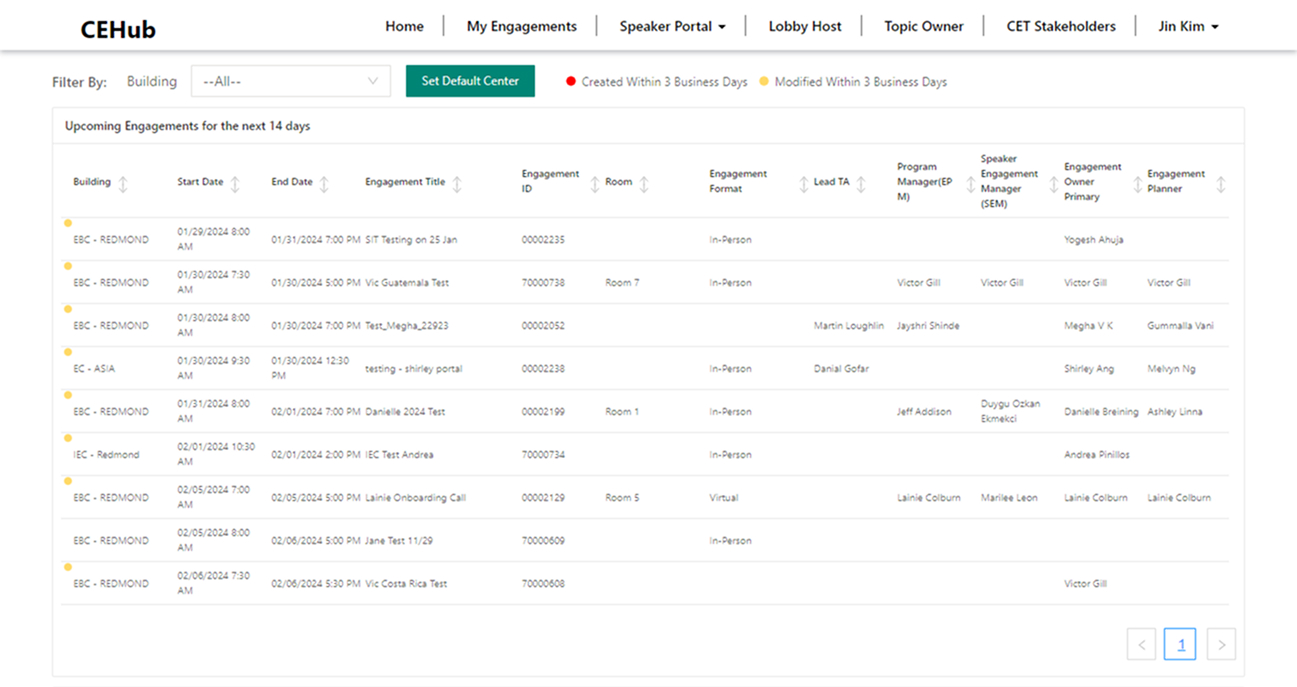
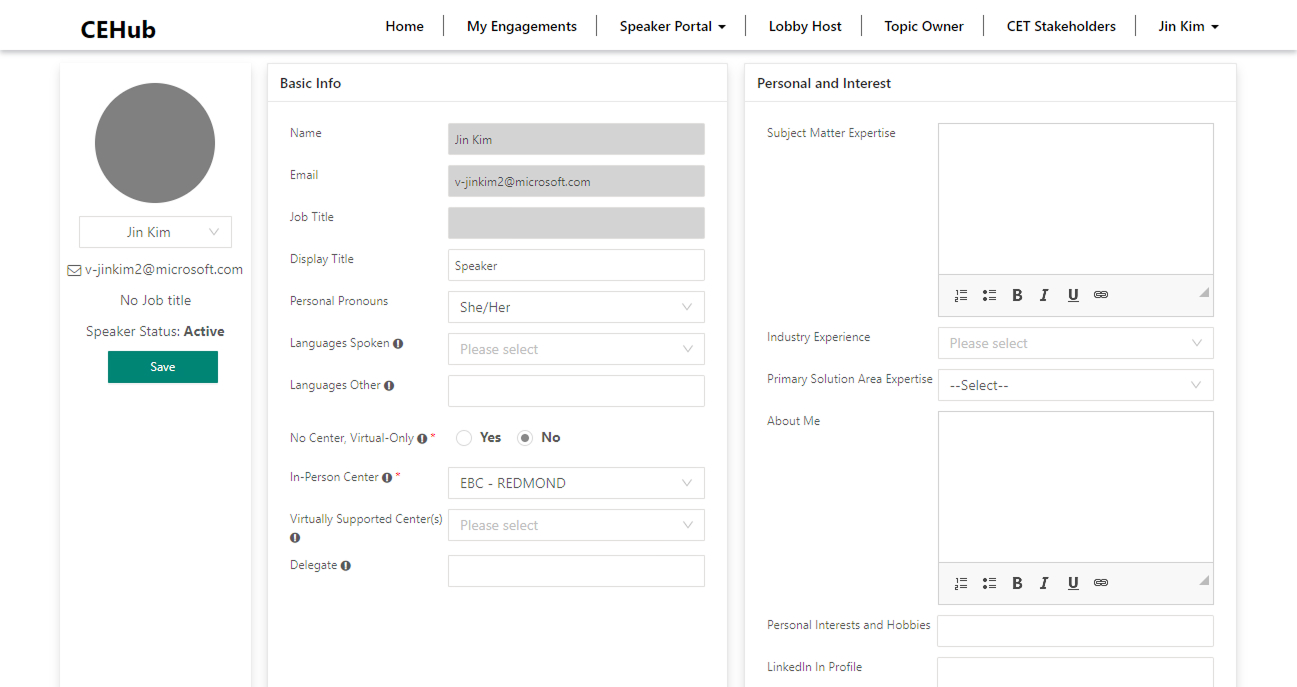
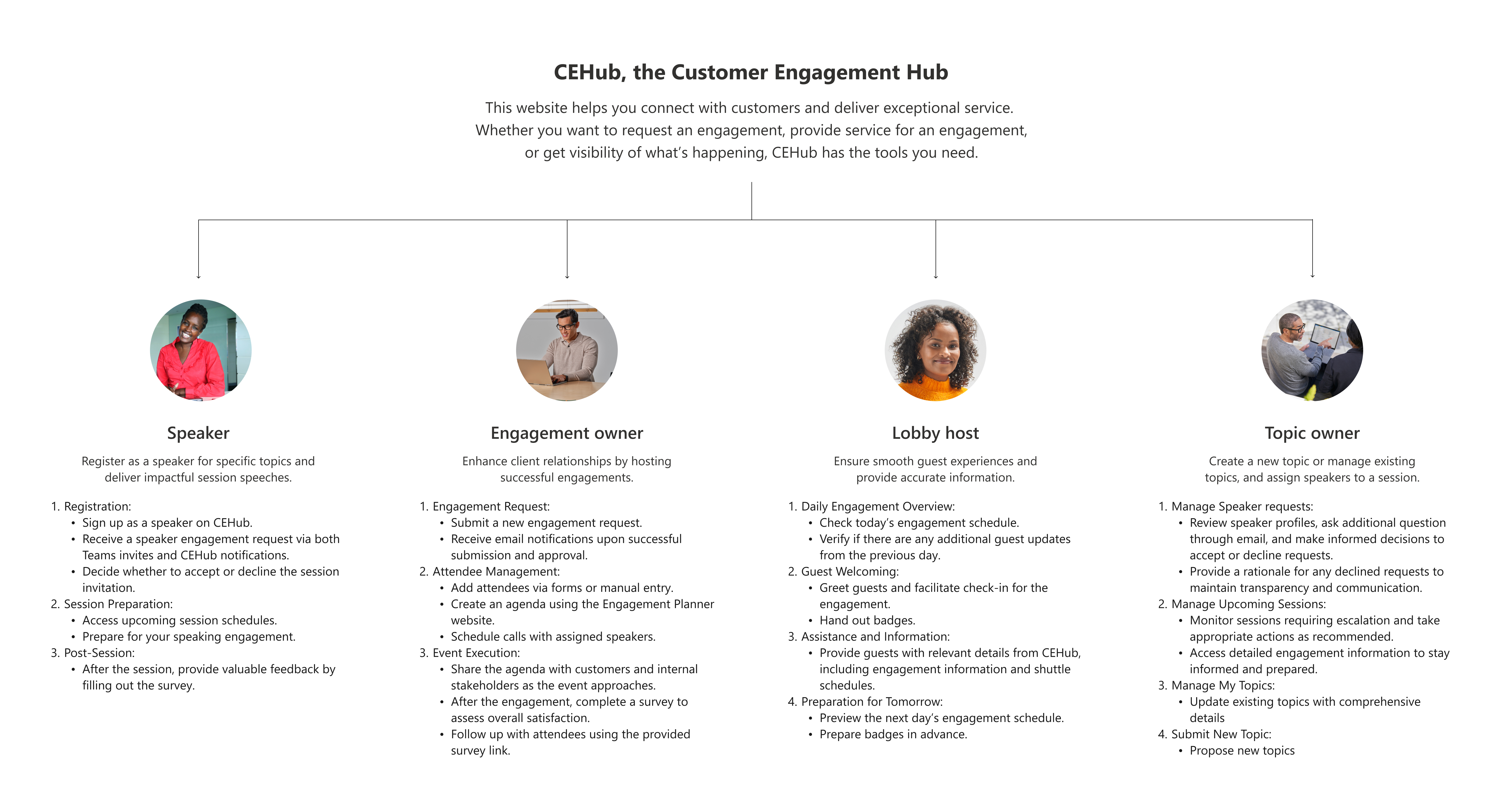
Four roles, one portal — without losing the role-specific workflows.
The core challenge behind CEHub wasn’t simply designing multiple dashboards. It was creating a shared operational system flexible enough to support very different user goals without fragmenting the experience into disconnected tools.
Each role interacted with the same underlying engagement ecosystem, but from a completely different perspective:
The four objects
- The Speaker focused on session delivery
- The Engagement Owner managed customer coordination
- The Lobby Host handled onsite logistics
- The Topic Owner managed content and speaker operations
Rather than creating separate products for each role, I designed a shared object model that surfaced role-specific actions against the same underlying system.
This allowed users to move seamlessly across workflows while maintaining consistency across the platform.
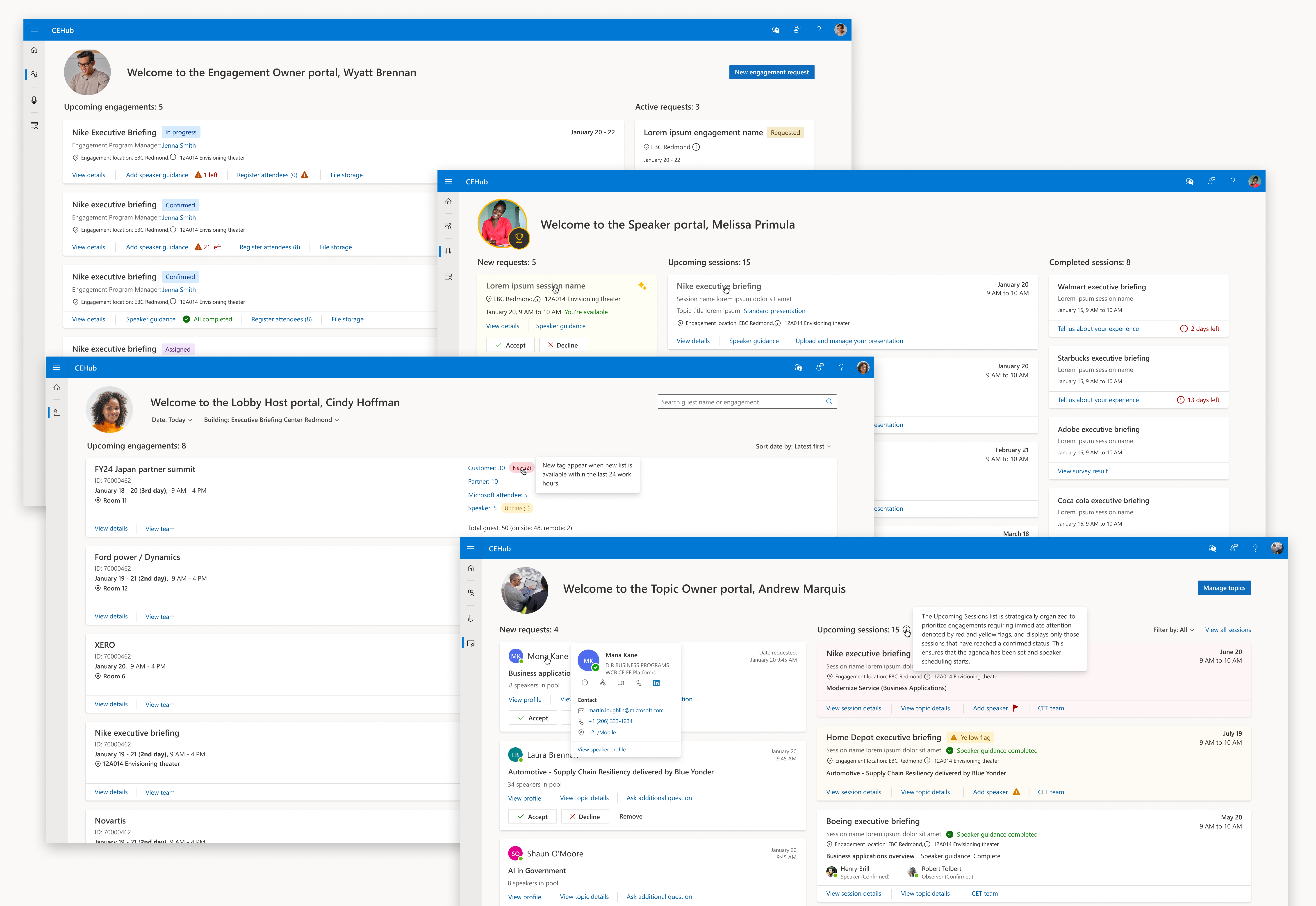
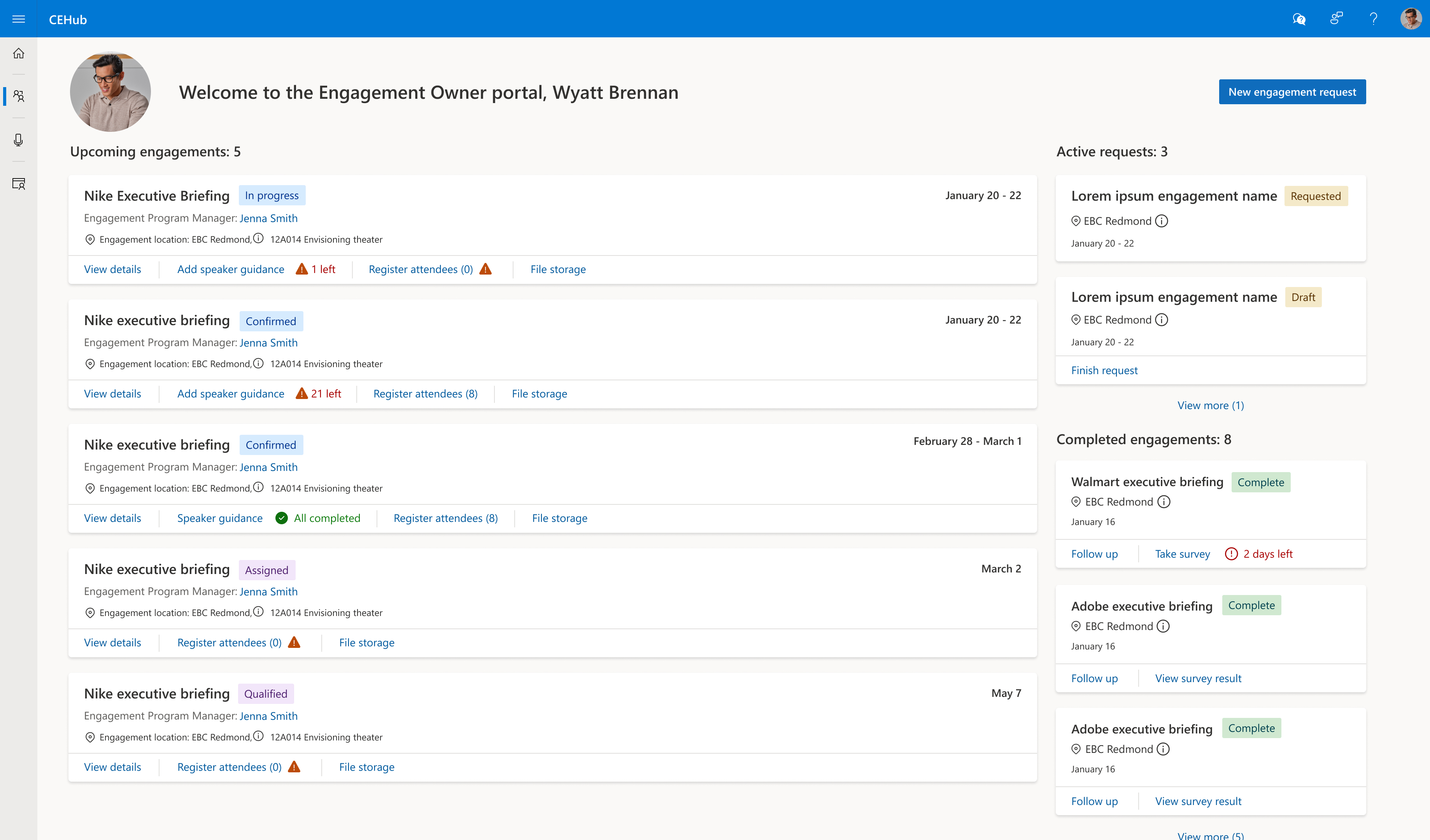
The engagement dashboard became the operational center of the product.
Once we aligned on a shared engagement detail page across all roles, the challenge became helping Engagement Owners quickly understand what required attention across multiple active engagements.
The original workflow relied heavily on emails, spreadsheets, and disconnected status updates, making it difficult to track progress or identify blocked tasks.
I redesigned the homepage as an operational dashboard where each engagement card surfaced:
- Real-time progress states
- Contextual status tags
- Outstanding tasks
- Role-specific calls-to-action
Clear CTAs like "Add speaker guidance”, “Register attendees”, “File storage” helped guide users toward the next required action without navigating across multiple workflows.
The goal was to make operational visibility immediate and reduce the coordination overhead required to manage customer engagements.
It’s the first time I’ve been able to understand the state of every engagement without opening multiple tabs. — Engagement Owner, internal feedback session
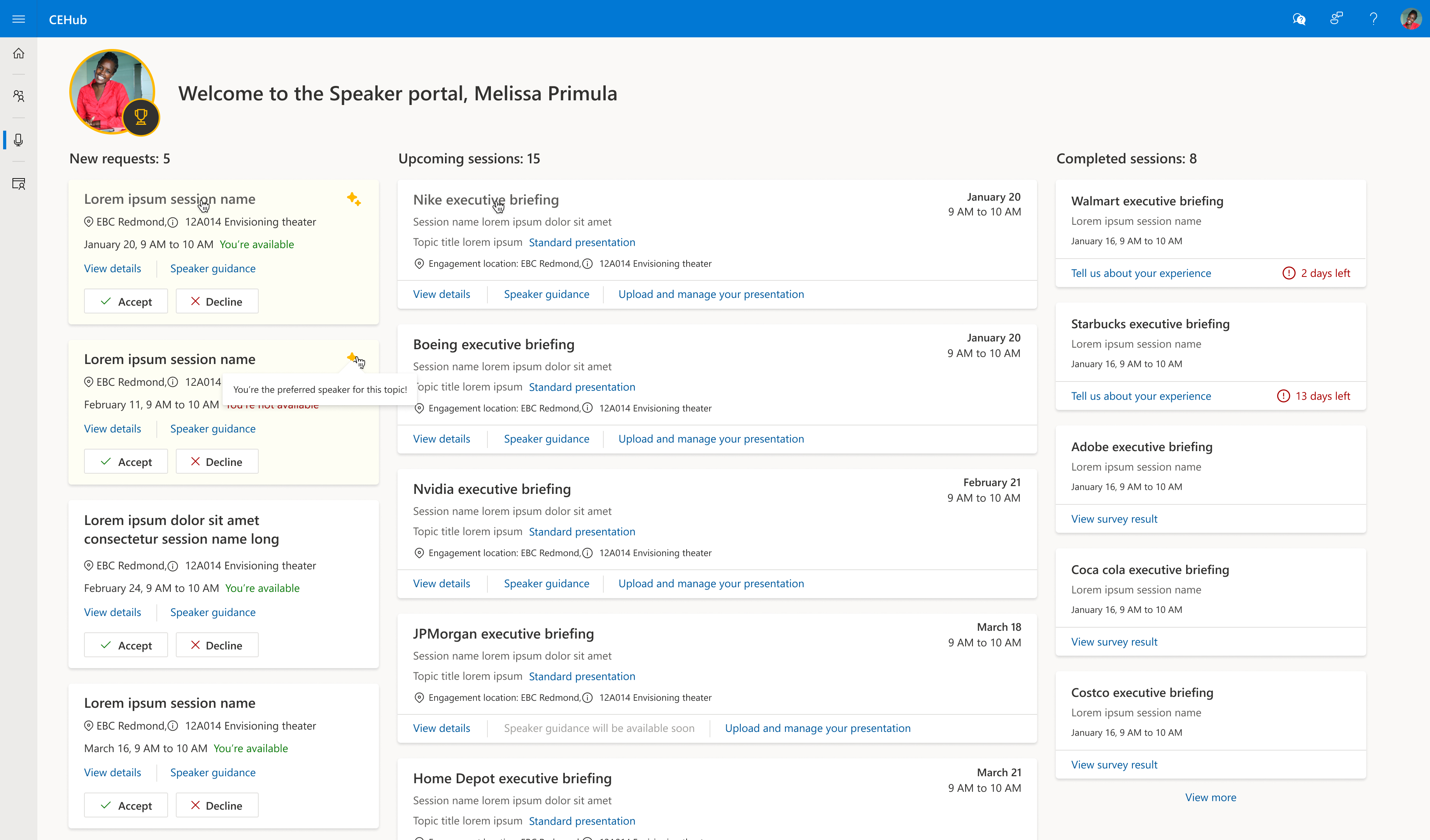
The speaker experience had a different problem: critical information was buried.
Speakers often managed session requests entirely through email, making acceptance decisions, preparation materials, and engagement details difficult to track across Outlook threads, Teams messages, and calendar invites.
To simplify the workflow, I designed a centralized speaker dashboard that organized:
- Incoming session requests
- Upcoming schedules
- Engagement details
- Preparation documents
I also introduced clear calls-to-action like "Accept or decline request”, or “Upload and manage presentation”.
The goal was to reduce coordination overhead and give speakers a single place to manage everything needed to prepare for customer engagements.
I no longer had to search through email threads to figure out what still needed preparation. — Speaker, internal feedback session
The numbers, with caveats.
CEHub launched to all four roles in early 2024. The headline outcome was the consolidation itself: nine tools rolled into one, supported by a single back-end. Beyond that:
Tools consolidated into a single portal.
Average time saved per engagement, by Engagement Planners.
Roles adopted CEHub within the first quarter after product launch.
Takeaways
- Designed a shared operational system that supported multiple roles and workflows without fragmenting the experience into disconnected tools.
- Simplified complex enterprise coordination by surfacing clear progress states, contextual actions, and operational visibility across the platform.
- Strengthened my systems-thinking approach by designing scalable workflows across interconnected roles, processes, and organizational constraints.